


Brochure Designing: Your Guide to Effective Marketing

Updated: Mar 15
In today’s fast-moving business world, grabbing a customer’s attention is more challenging than ever. While digital marketing is everywhere, printed marketing materials like brochures still play a powerful role in business communication.
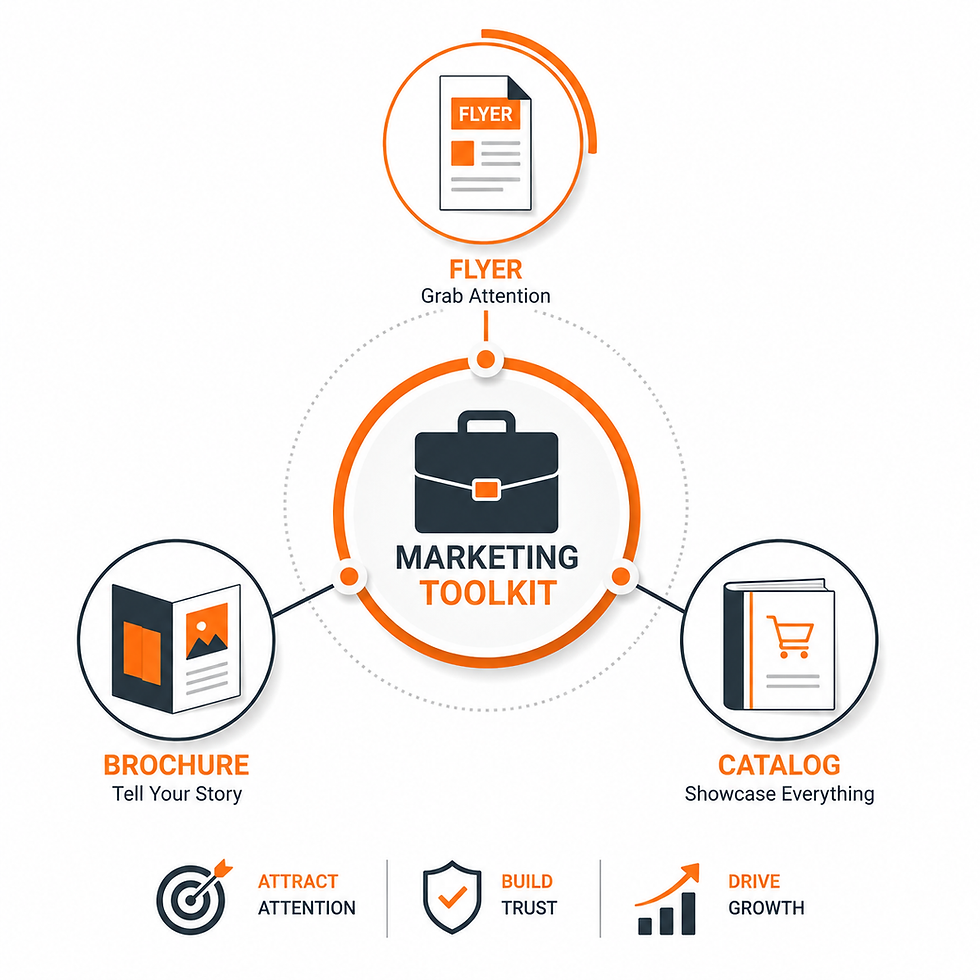
A well-designed brochure does more than share information — it tells your brand story, showcases your services, and creates a lasting impression on potential customers.
Businesses that want professional marketing materials often partner with Orange Circle — Rajkot’s Best Branding and Advertising Agency, known for creating impactful branding, creative brochure designs, and strategic marketing solutions.
If you want to explore professional brochure design and branding services,
visit:👉 https://www.theorangecircle.in/
Let’s explore how brochure design works and why it remains one of the most effective marketing tools for businesses.
Types of Brochures

Bi-Fold Brochure: A single sheet folded in half, creating four panels. This format is great for straightforward messages.
Tri-Fold Brochure: A sheet folded into three sections, commonly used for informational purposes. It’s compact and easy to distribute.
Z-Fold Brochure: Similar to a tri-fold but folds in a zig-zag pattern. This design allows for a creative presentation of information.
Booklet: Multiple pages bound together, ideal for detailed information. Booklets are perfect for comprehensive product catalogs or service descriptions.
Design Elements

Color Scheme
Choose colors that reflect your brand identity and evoke the desired emotions. Colors can influence how your audience perceives your message. For example, blue often conveys trust, while red can evoke excitement.
Typography
Use clear and readable fonts. Maintain consistency in font styles and sizes. This ensures that your message is easy to read and visually appealing. Avoid using too many different fonts, as this can create a cluttered look.
Images and Graphics
Incorporate high-quality images and graphics to enhance visual appeal and support the content. Images can capture attention and help convey your message more effectively. Always ensure that your visuals are relevant and of high resolution.
Layout
Ensure a balanced layout that guides the reader's eye through the brochure. A well-structured layout makes it easier for readers to absorb information. Use headings, bullet points, and white space effectively to create a clean design.
Content Tips
Clear Messaging
Communicate your message clearly and concisely. Avoid jargon that might confuse your audience. Instead, use straightforward language that resonates with your readers.
Call to Action
Include a strong call to action that encourages readers to take the next step. Whether it’s visiting your website or calling for more information, make it clear what you want them to do.
Contact Information
Make sure to provide clear contact details for inquiries. This includes phone numbers, email addresses, and social media handles. The easier you make it for potential customers to reach you, the better.
Printing Considerations

Paper Quality
Choose high-quality paper that complements the design. The right paper can enhance the overall feel of your brochure. Consider options like glossy for vibrant colors or matte for a more subdued look.
Finish
Consider finishes such as matte, glossy, or uncoated for different effects. Each finish can change the perception of your brochure. For instance, a glossy finish can make colors pop, while a matte finish offers a sophisticated touch.
Size
Standard sizes are often more cost-effective, but custom sizes can stand out. Think about how your brochure will be distributed. A unique size can make your brochure memorable.
Additional Tips for Successful Brochure Design
Know Your Audience
Understanding your audience is key to effective brochure design. Tailor your content and visuals to meet their preferences and needs. This connection can significantly enhance engagement.
Test Your Design
Before finalizing your brochure, test it with a small group. Gather feedback on both design and content. This can help you identify areas for improvement.
Stay Updated
Trends in design change frequently. Keep an eye on current design trends to ensure your brochure feels modern and relevant. This can help you maintain a competitive edge.
Use Data-Driven Insights
Incorporate data-driven insights into your design process. Analyze what works and what doesn’t in your previous marketing materials. This can guide your decisions and improve effectiveness.
Conclusion

A brochure is not just a piece of printed paper — it is a powerful storytelling tool that introduces your brand, highlights your services, and builds customer trust.
When designed strategically, a brochure can:
• Strengthen your brand identity
• Improve marketing communication
• Support sales conversations
• Leave a lasting impression on potential clients
If your business wants to stand out with professional brochure designs, creative branding, and high-quality printing solutions, Orange Circle — Rajkot’s Best Branding and Advertising Agency — offers the expertise you need.
With a combination of creative design, strategic marketing, and premium printing, Orange Circle helps businesses build strong brand identities and achieve measurable growth.
Discover how professional branding can transform your business:


Comments